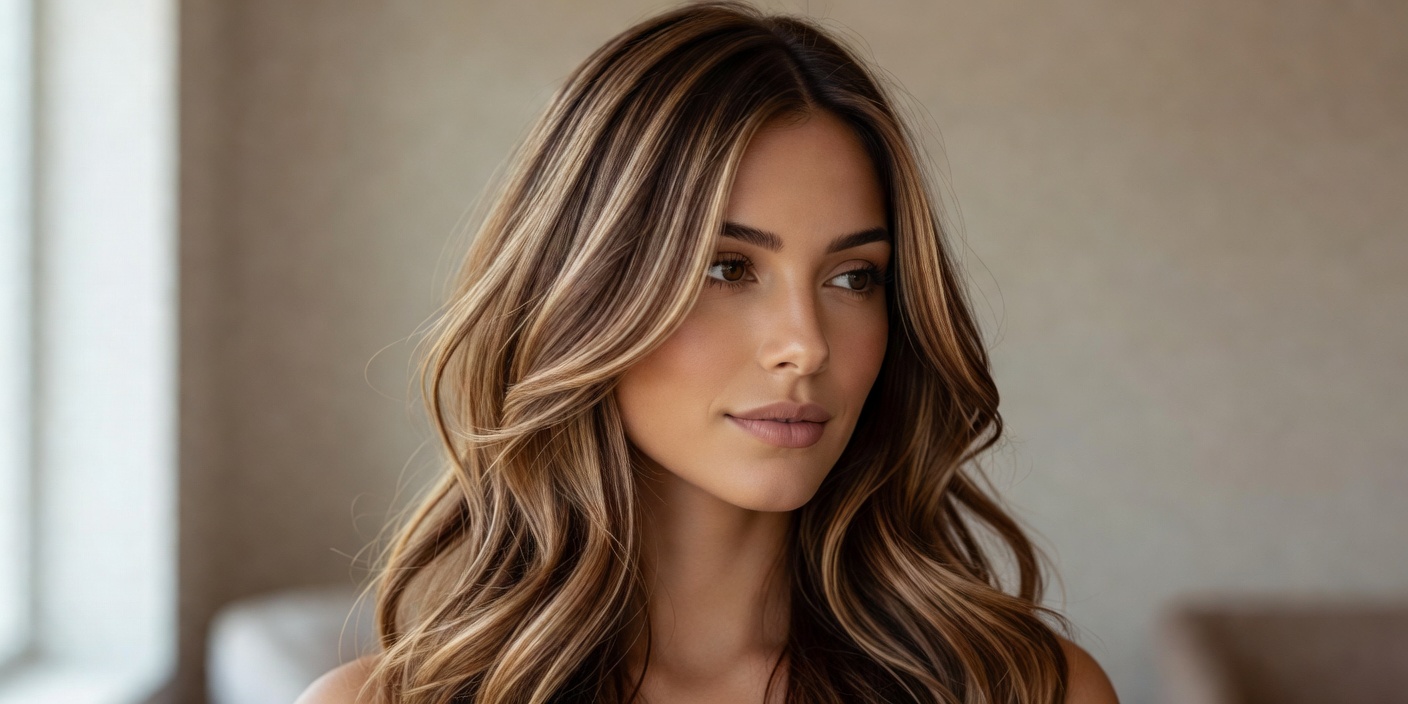
Service introduction
Dimensional colour is used when a single block shade would look flat, or when you want movement that grows out more gently than a hard root line. Highlights, lowlights and balayage each sit differently on fine, thick, straight or wavy hair. The consultation decides which method — or which mix — belongs on your head this time.
Natural-looking does not mean invisible. It means the lightest pieces sit where daylight would naturally catch, and the darker pieces still connect to your root. If you want a bolder contrast, that can be discussed too; it simply needs an honest conversation about maintenance.
What the appointment involves
Hair is assessed dry so the natural fall is visible. Sections are planned around your parting, fringe and crown. Lightener or colour is applied in foils, painted freehand, or both. Processing is watched closely because lengths often lift at a different speed from new growth. Once rinsed, a toner or gloss is typically used so the result is not left at a raw lift. The hair is then dried and the placement is checked in movement, not only at rest.
Preparation guidance
Come prepared to talk about how often you can return. Highlights that look soft in month one can feel striped if the plan ignored your budget of time. Avoid experimenting with home bleach beforehand. If the hair has old highlights, a photograph of the last salon result — even an imperfect one — is more useful than a celebrity still. Wear a top you do not mind covering with a cape, and allow a longer appointment than a simple cut.
What visitors can expect
This is one of the longer chair services. You will have periods of sitting while processing takes place; bring something to read if you like. The stylist should explain why a section is foiled rather than painted. You can ask to see a mid-process check if you are uneasy about lift. The finish should be judged in the same lighting you live in as far as the salon allows — near the window if needed — because overhead lamps flatten dimension.
Suitable situations
- Softening a block colour that has gone dense
- Adding lighter pieces around the face without bleaching the whole head
- Maintaining existing highlights that have grown through
- Building brightness over more than one visit when the hair needs a slower path
Aftercare considerations
Lifted hair is often drier at the ends. A gentle wash routine and less frequent heat will help the tone stay even for longer. Purple or blue supporting products are optional tools, not requirements, and they can over-ash if used daily — ask before you empty a bottle on new colour. Book a trim if the ends are already fragile; colour placement cannot repair length that is ready to leave.