Service introduction
Hair colour at brightkioskstage is a practical service, not a transformation guarantee. Permanent, demi and toner options are chosen according to grey coverage needs, previous tint, and how often you want to return. We do not promise a photograph-perfect match to a filtered image, because lighting, undertone and the history of the hair all play a part.
If the hair has been coloured at home, or lightened more than once, that information is essential. It changes timing, product choice and whether a single visit is even the right idea. A staged plan can be more respectful of the fibre than forcing a result in one sitting.
What the appointment involves
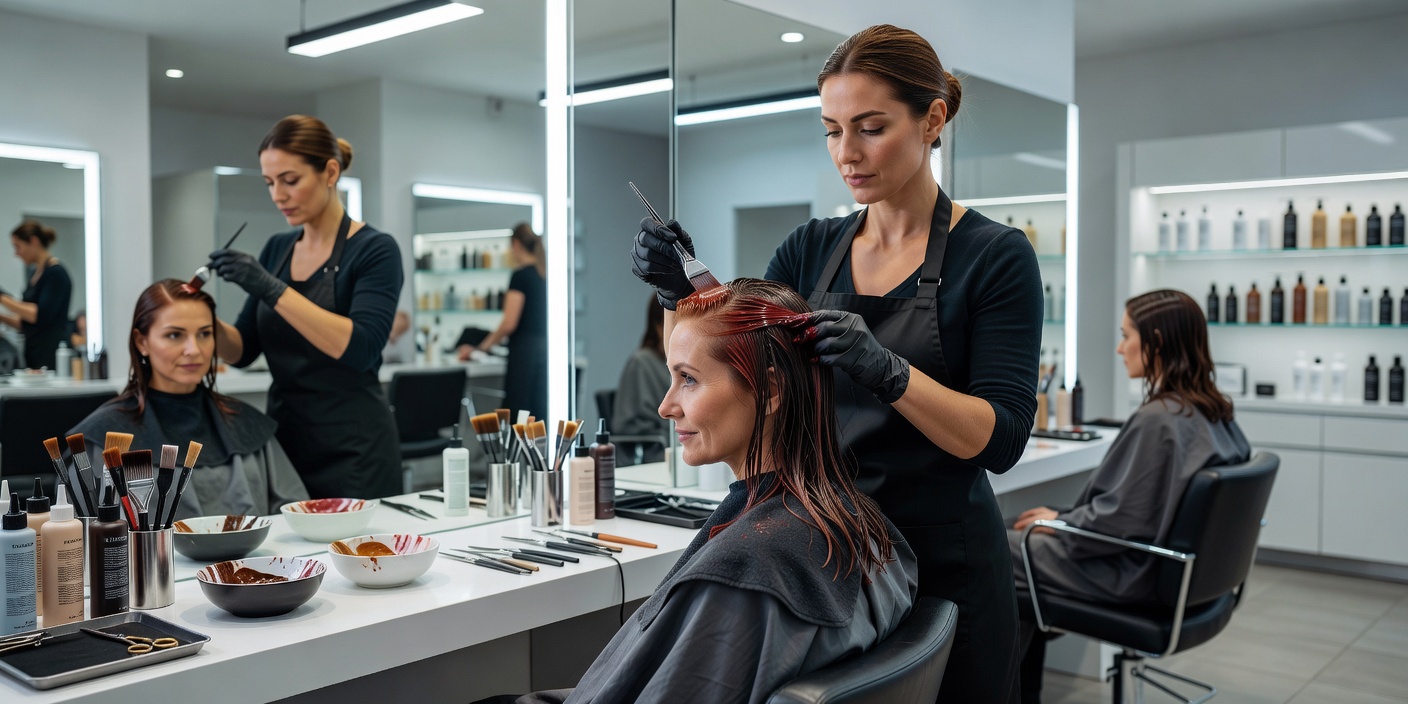
The visit opens with a look at roots, mid-lengths and ends in daylight-balanced lighting where possible. You will be asked about the last colour date, any boxes used at home, and how you feel about warmth or ash. Formula is mixed once the direction is agreed. Application may be roots only, a refresh through the lengths, or a full application. Processing time is monitored, then hair is rinsed, treated as appropriate for the service, and dried so you can judge the result as you will actually wear it.
Preparation guidance
It is helpful to arrive with unwashed hair if that is what your stylist requested during enquiry, as some colour services sit better on hair that is not freshly stripped. Mention known sensitivities you already have, recent henna, metallic dyes, or scalp discomfort. Photographs of the target tone are useful when they show hair in daylight rather than nightclub lighting. If you have an important event within a few days, say so — some colour needs a short settling period before you judge it.
What visitors can expect
Expect a clear explanation of what the current hair will and will not do today. You remain seated with a colour-safe cape. Foils are not always required for this service; they belong more often with highlights. You will not be left guessing how long the process takes — time checks are part of the visit. The dry-down is when depth and reflect are assessed together, and a toner may be added if the plan included one.
Suitable situations
- Covering or blending new growth on an existing colour
- Softening a shade that has become too warm or too flat
- Moving gradually darker or slightly lighter within a realistic range
- Reintroducing salon colour after a long break, with a conservative first step
Aftercare considerations
Wait until the time discussed in the chair before the first wash. Use lukewarm water and avoid aggressive clarifying if you want the tone to last more evenly. Sun, chlorine and frequent heat will shift colour; that is ordinary wear, not a fault of the appointment. A later treatment or gloss can be booked if the ends need support — it is optional care, not a medical protocol.